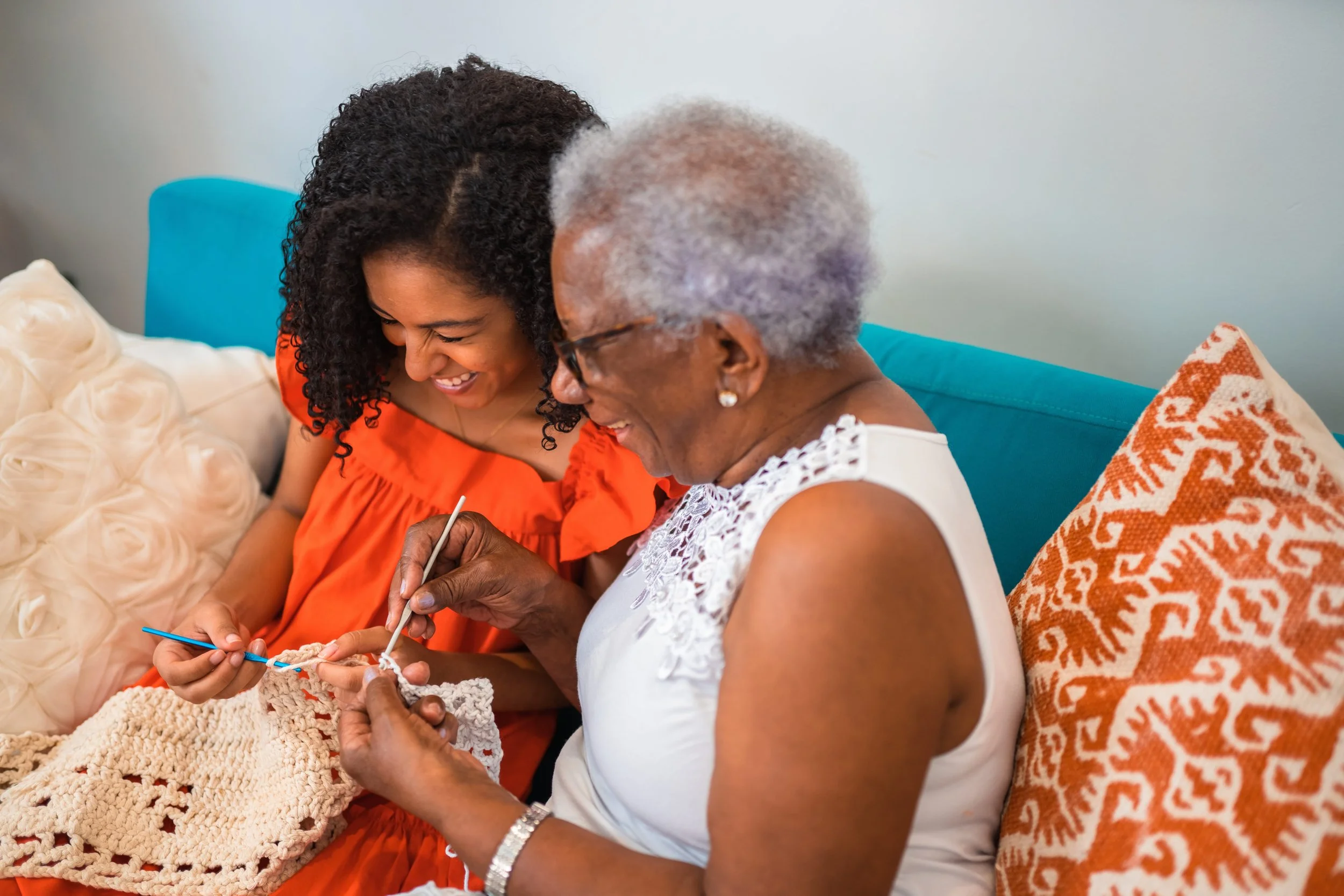

Cultivating Intergenerational Friendship
An Unexpected Intergenerational Friendship
Joy Ryan turned eighty-five years old and confessed she had never seen a mountain. Her grandson, Brad, heard the statement and found it shocking. The grandmother he knew loved the outdoors had been limited to the simple rolling hills of a nearby town. Yet, as he looked around at the open plains of Ohio, where his grandmother spent her entire life, the admission became understandable. Of course she had never seen a mountain, and of course he was going to do something about it.
Brad invited Joy on a road trip. He proposed a day’s drive south to the Great Smoky Mountains so she could see the beauty of the vast, mountainous landscape. Brad sent out a few posts on social media to close friends, but their story became widely known as others began to learn about this grandmother and grandson. Strangers began to donate funds so that their adventures could continue. They loaded up in the car, unaware that this single trip would be the first of many adventures to other national parks. Over the next seven years, the pair would make an effort to visit every national park in America.
They were interviewed in August of 2022 about their shared quest. They revealed how that first trip began to heal the estranged grandmother and grandson. Due to his parents’ divorce, Brad and Joy had not talked in nearly a decade. His simple invitation opened a door and served as a catalyst for reconciliation. That initial connection renewed their relationship, but they formed new kinds of friendships on their adventures. They met people at each national park. They forged connections online. One relational ripple formed a much larger community of connection and hope.
Each spoke about the amazing transformation they experienced. Brad shared about personal transformation. He was struggling with his mental health when the journey began. Yet his grandmother, and her life of struggle and survival as a widow, helped him to learn what it meant to be resilient. Joy voiced the relational transformation. She said, “What started as a grandparent-grandchild relationship has become a friendship. I don’t think there is a stone we have left unturned through sharing our stories.” Grandson and grandmother, sharing stories and adventures, had their relationship transformed into friendship. But not just any kind of friendship—an intergenerational one.
Reflections on Intergenerational Friendship
I have been writing a series of reflections over the last year exploring the theme of intergenerational ministry. This way of “being the church” is one where all ages are invited to participate in the community of faith. Intergenerational ministry happens when every generation can contribute in meaningful and mutual ways. No matter your age, no matter your stage of life, you have something to contribute. If we were to borrow from Paul’s metaphor of the church as the Body of Christ (Rom. 12, 1 Cor. 12), we might say that every part of the Body, every generation, has something to offer to the larger whole.
In these passages on gifting, Paul also reminds us that it is never just about gifting. These passages are not intended to only turn us inward, though there is a time and place to consider how God has gifted each of us. Paul ultimately intends for these passages to turn us outward—to consider our relationships with the rest of the Body. Are we considering the gifts that others offer? Are we even connected to the rest of the Body?
Friendship is one way to talk about this connection. I understand the word “friend” can be flimsy in a world of social media “friends” or other casual uses of the term. But I still want to hold it up as a kind of goal or aim for our relationships within church, especially with people of a different generation. There is a long history of what constitutes true friends, but most can agree that friendship contains relational dynamics of mutuality and meaning. Friends share real give-and-take. Friends create deeper experiences of life with us. Friends are often within our same age and stage of life, but the story of Brad and Joy reminds us that meaningful friendship can reach across generational divides in beautiful ways. Can we say that we are friends with anyone of a different age than our own? Are our communities of faith creating spaces where intergenerational friendship might begin to blossom and bloom?
Cultivating Intergenerational Friendship in Church
I would hope that churches and their leaders are trying to aim for these environments where such generational relationships can grow into healthy, vibrant friendships. Drawing from the story of Brad and Joy, and from other experiences in ministry, I’d like to offer a few ways for leaders to help set the table for intergenerational friendships to occur:
Extend an Invitation. The adventure of Brad and Joy began with a simple request from the grandson to his grandmother. He did not let ten years of separation prevent an invitation. Generational divides come in all kinds of ways—stereotypes in our hearts, separate spaces in our buildings—but these do not have to be permanent. Nothing changes if no one changes. To initiate a change in a relationship requires the risk of request, an ask, an inquiry. Would you like to join us for lunch? Could I take you to coffee to pick your brain about a decision? Do you want to take a trip to the Great Smoky Mountains? Okay, I would not start with that last one, but who knows?!
Make Play a Priority. One undervalued dimension of church life is the formative power of play. Too often we gather for worship and study, then leave our church buildings lacking any other experiences together. However, things like games and recreation can also bond people of different generations in deep ways. Host a game night where every generation brings a favorite game. Launch a weekly gathering based on a favorite hobby that extends across all ages. Or maybe take a cue from Brad and Joy: set out on an adventure to a local park where different generations can gather outside together.
Create Environments for Story Sharing. Grandma Joy made it clear that a turning point in their relationship changed through sharing stories with her grandson Brad. How did that happen? They put themselves in an environment where they could share—in a car on a road trip, overlooking mountainous vistas, and interacting with new people together. One avenue for generational stereotypes to transform into real relationships is when people can tell their stories to each other. Often, all a church leader needs to do is create an environment where old and young can begin to share more about their lives and hear from the lives of others.
The Possibility of Intergenerational Friendship
Brad never set out to create a movement that would garner national attention. All he wanted to do was to invite his grandmother to see a mountain for the first time. Yet, that invitation became a catalyst for more—a renewed relationship, a new community of friends, and a story that still ripples out into our minds and hearts. This relationship models the possibility of intergenerational friendship. We rarely know what God might form when we invite someone to coffee, we host a game night, or we share a bit of our story with someone of a different generation. Their story reminds us that the next friendship in our lives might only be on the other side of a simple invitation.