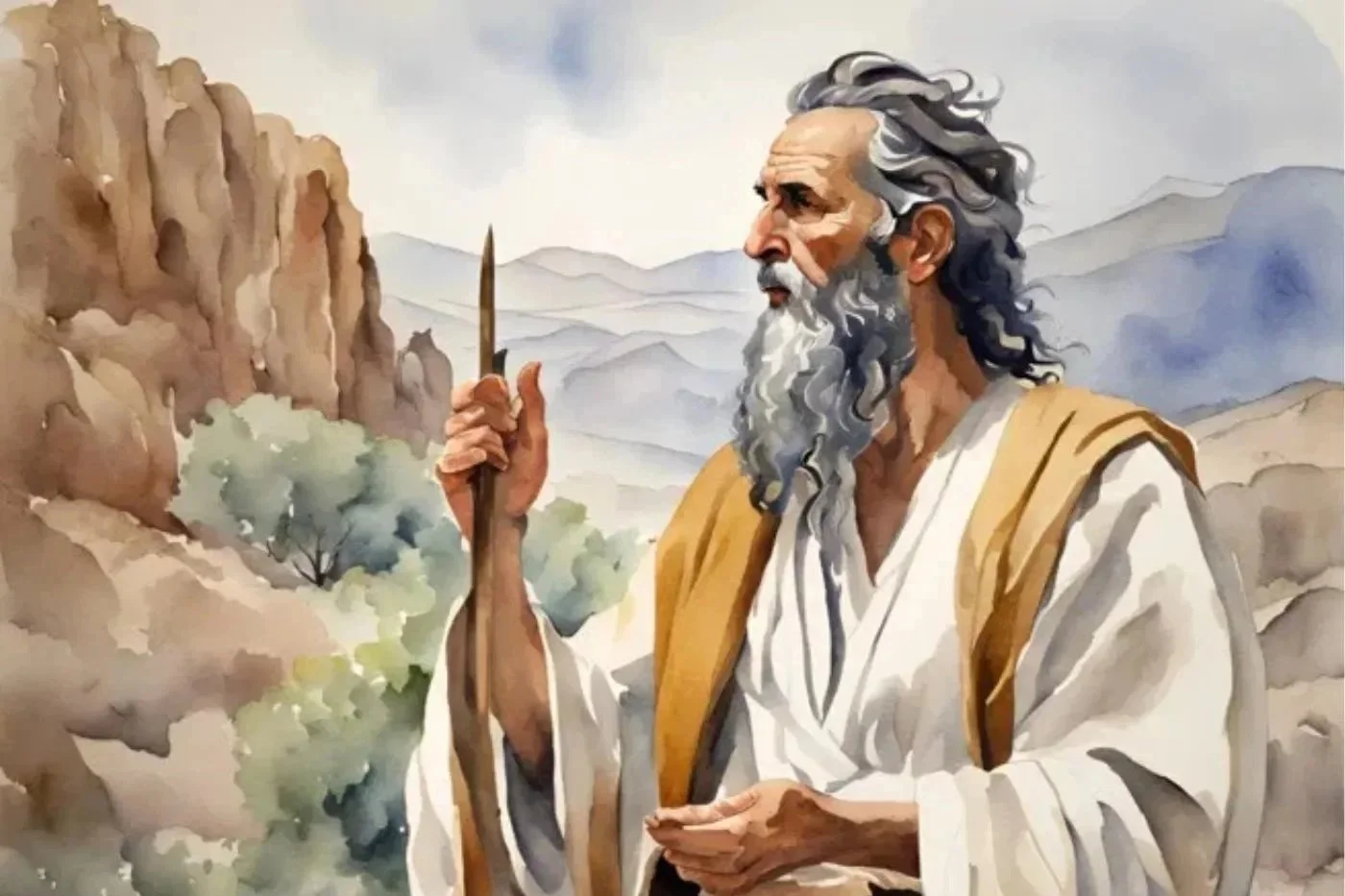

The Twelve Minor Prophets for Today’s Church (Part 4): Narrating the Past
Prophets suffered on behalf of the good news of God’s call to justice, mercy, and love of neighbor. They called out oppressive acts and patterns of behavior whenever and wherever they occurred, both among the people of Israel and among their neighbors.
Underneath their call for a better way of living lay narratives of both the past and the future. Stories of the past include creation and the reign of David, but especially the exodus story. We’ll come to their stories of the future in the final essay in this series. Consider their view of the past first.
It almost goes without saying that all communities that survive a long time tell stories of their own past. These stories concern the groups’ origins, their heroes and foes, their struggles for better lives. Often, the group may interrogate its own stories and storytellers to make sure the version of the story told is correct. Moreover, that feedback loop is crucial to the health of the group. When it forgets its past or warps its memory of its past, the group sickens and eventually dies.
For the prophets, the key stories involved both God’s mercy and their ancestors’ unfaithfulness. They would have found appalling or even incomprehensible the frequent move Christians and others make today to revere preceding generations, especially the “founders” of the country or our religious group, as much more godly than they were. Zechariah’s question “as for the ancestors, where are they?” echoes in different forms through many biblical books (for example, Deuteronomy 1-4 and Nehemiah 9).
They would also have rejected the modern myth of the past that plays such a large role in parts of the contemporary church in the United States. That myth speaks of a glorious era decades ago when the society was godly but somehow went astray. The most common version of that operative in our churches says that America, now baptized as a vehicle of God’s work, used to be Christian, but it fell away when it got rid of prayer in school or allowed certain discussions of geology and biology or changed traditional views on gender and sexuality. There was, the story goes, a falling away. Now must come a restoration.
This powerful myth plays in the mind of many Christians. But it is false to its core. Nothing of the sort ever happened. Prayer didn’t leave school. Science is not the enemy. And the supposed piety of the past went hand in hand with racial cruelty up to and including lynching. The ancestors, like us, were imperfect. America is not a chosen people, just one of many nations.
All of that is so obvious that saying it seems not worth the energy. Yet we must say it in order to hear the prophets’ voice more faithfully.
In contrast to a naïve or self-serving view of the past, the prophets showed a deeper degree of perception. Amos speaks of the exodus as a touchstone while indicting Israel for abusing the poor and using religion as a screen for their injustices:
“Yet right in front of them, I had destroyed the Amorites,
Who were tall as cedars, strong as oaks. Truly I destroyed their fruit on top and their roots below.
Then I lifted you from the land of Egypt and led you in the desert forty years to inherit the Amorites’ land.
I raised up your sons to be prophets, your youth to be Nazirites.
Isn’t this so, Israel’s children? Yhwh’s oracle.” (Amos 2:9-11)
The past becomes a touchstone for the present. The past saw divine intervention on behalf of the people but also human contempt for suffering people. No one learned anything from history because they imagined it to warrant whatever they wanted to do. “We are the chosen, and whatever we do is right” is a stance toward life that did not go out of style in the eighth century BCE.
Amos’s contemporary Hosea expressed a similar view in the text quoted in Matthew 2:15. As part of God’s reflections on the future fate of Israel, Hosea says:
“When Israel was a youth, I loved him, and I called my son from Egypt. The more I called to them, the more they walked away from me. They sacrificed to the ba’als and burned incense to idols. But I taught Ephraim to walk, taking him by his right hand. But they didn’t know that I healed them….” (Hosea 11:1-3)
Again, the prophet contrasts divine grace with human sin. God’s people have lost track of their story by following the all too human impulses to worship false gods that seem real but remain manageable. Those gods do not care how we treat each other or whether we respect the Holy One. They accept greed and the love of power as long as we throw in a few pretty words occasionally.
Another example of the Minor Prophets’ handling of the past appears in their (few) mentions of King David. Again, the story is mixed. Amos can simultaneously speak of rich people recklessly living in luxury like David (Amos 6:5) and of a future reconstruction of “David’s fallen booth” (Amos 9:11). Hosea 3:5 envisions Israel’s return to “David their king,” that is, the undoing of the division between northern Israelites and southern Judeans. Zechariah 12:8 imagines a world in which everybody surpasses David in grandeur, a vision of dramatic improvement of Israel’s condition. In short, this figure from the past becomes a symbol either of a flawed present or of a hoped-for better future.
The world of Amos, Hosea, and Micah lay in the distant past by the time Zechariah came along two centuries later. His description of the past, already mentioned in previous posts, has a similar coloring. The later prophets, and undoubtedly those responsible for bringing all the Twelve together, thought of the past as a struggle for faithfulness much like the present.
The main lesson of the past is not to overvalue the past. Distinguish between right and wrong, good and evil, mercy and cruelty, hope and despair. Without that ability to see clearly the stakes and the stakeholders of the moment, we all perish. With it, we live.