Woven
Many years ago, during a Family Ministry course, a Bible professor shared a truth about marriage. Drawing a triangle on the board, he wrote “God” at the apex. He then indicated that if a husband travels from the bottom left corner along the edge of the triangle toward the top, and a wife travels from the bottom right corner toward the top, the two naturally move closer to each other as they simultaneously move closer to God.
I regularly use this triangle illustration to show that drawing closer to God unites us with one another. Recently, at a women’s gathering, I explained that, as Christians, we collectively approach God, and our relationships deepen. This core truth underscores why gathering in faith matters—and an illustration of this strength is found in Ecclesiastes.
Ecclesiastes is a book known for questioning life’s meaning, but it also supplies insights as it conducts its examination of this world and its pursuits. In chapter four the author shakes his head at the evil of oppression and a world that runs on envy. Then the author ponders the worthlessness of work and the emptiness of being alone. Ecclesiastes 4:9-12 reads:
Two are better than one, because they have a good return for their labor: If either of them falls down, one can help the other up. But pity anyone who falls and has no one to help them up. Also, if two lie down together, they will keep warm. But how can one keep warm alone? Though one may be overpowered, two can defend themselves. A cord of three strands is not quickly broken. (NIV)
This passage affirms that companionship is much more valuable than isolation. Let’s focus on verse 12 in the NIV: “Though one may be overpowered, two can defend themselves. A cord of three strands is not quickly broken.” Compare this with the New Living Translation: “A person standing alone can be attacked and defeated, but two can stand back-to-back and conquer. Three are even better, for a triple-braided cord is not easily broken.”
To more fully appreciate these images, read the verse again slowly—perhaps even aloud—and reflect on the imagery it presents. Ask yourself: which of the following sets of words draws your attention?
Overpowered | Attacked and defeated
Defend themselves | Back-to-back and conquer
Cord of three strands | Triple-braided cord
Continuing with this imagery, can you envision the back-to-back stance? How much better can possible attacks be seen from multiple viewpoints in this position than when someone is surrounded and fighting alone? Consider where in your life you may be trying to face a challenge while looking all around at once. Contact a fellow believer and ask them to partner with you to bear that burden (Gal. 6:2). And be willing to back them up in the same manner when they are in need.
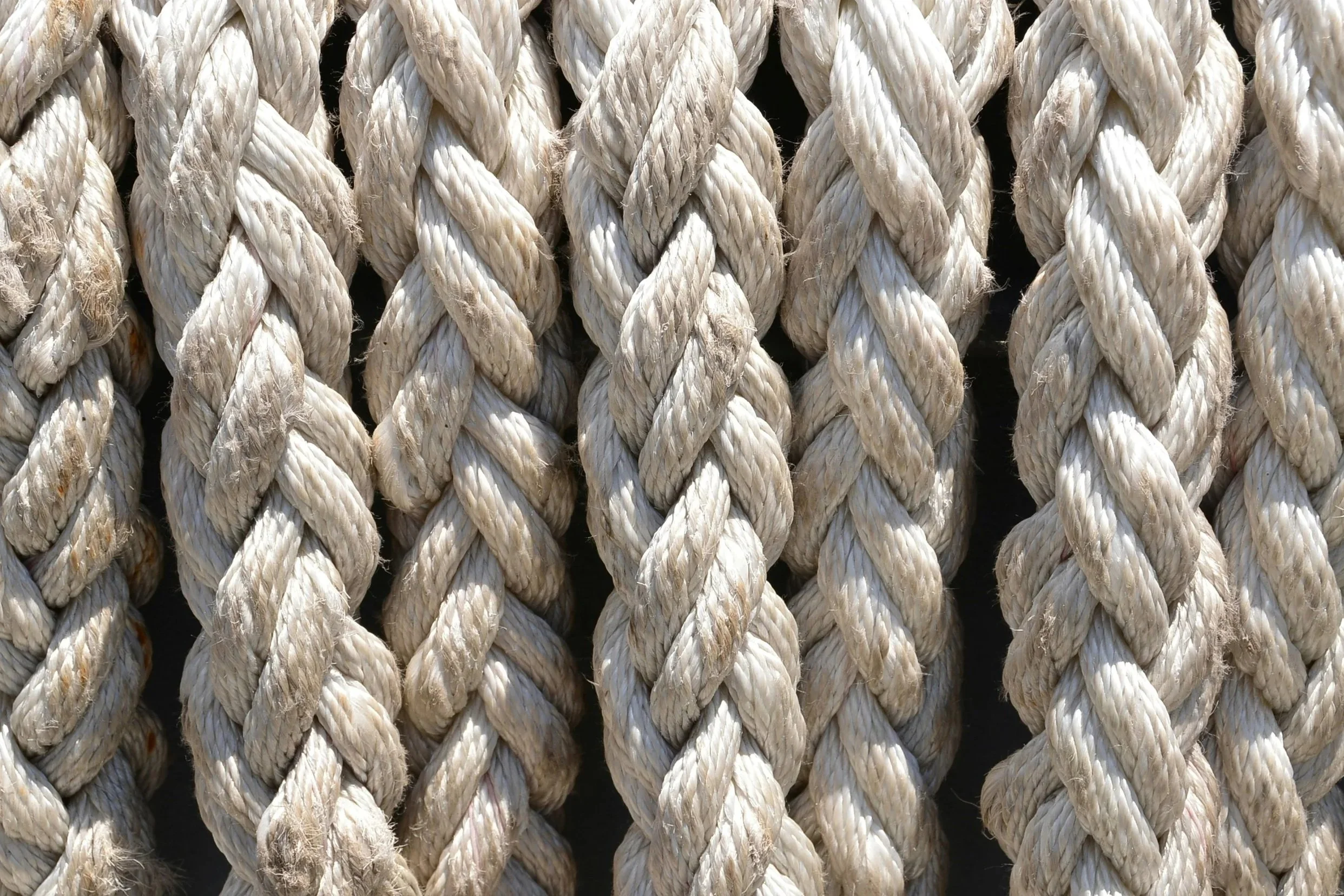
Now, consider a single thread and how easily it can be snapped or broken when pulled from opposite ends. Then look at a braid, where each strand is no longer individual but is plaited to form a stronger, interlocking structure. These aren’t just three strings lying flat beside each other; they are fully intertwined. And in that weaving comes a strength that is harder to pull apart. Can you envision other strands in your life right now? Are you lacking a strand, or do they need tightening?
Do not try to stand alone—see yourself not as a fragile, single string, but as part of a strong, reinforced braid. When you are united with others and with God, the burdens you face are lighter, and you are not defenseless. Pray to tightly weave your life with God and those around you, so that your community becomes an unbreakable cord.