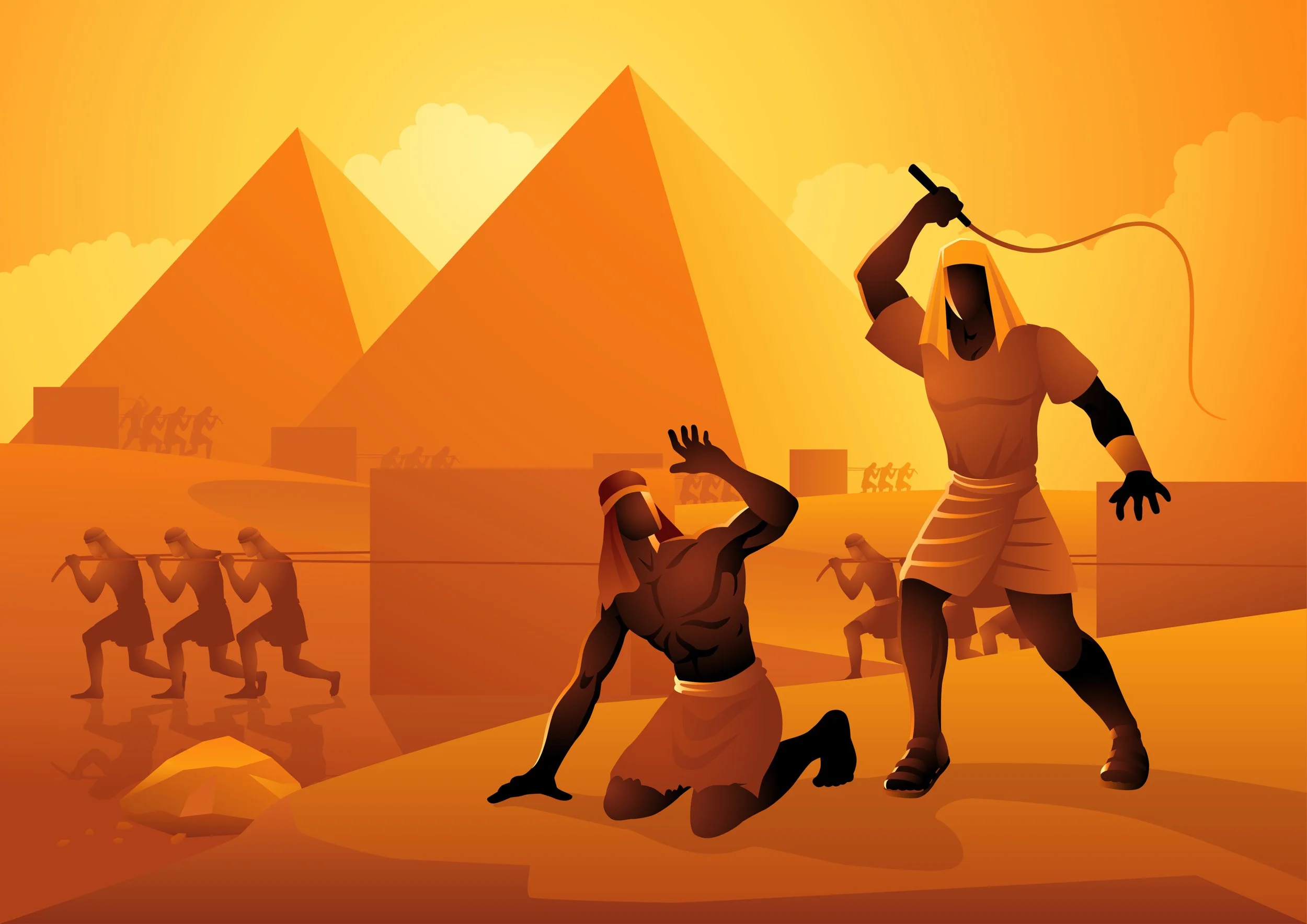

Habakkuk: Is a Prophet’s Message Bad News or Good News?
Welcome to part one of a four-part series on Habakkuk, written by Beth Ann Fisher. Here’s part two and part three.
Reflection Roundup reports from conversations couched in relationships. Here, readers will find boots-on-the-ground and “live from the field” items important to Christian leaders. As always, listening broadly draws together differing perspectives from which we can learn but with which we may not concur. This month’s post draws from multiple streams of ministry, at the levels of both local and missional congregations, each in a direction toward which the prophetic message flows contemporarily.
Which do you want first, the bad news or the good news?
Has anybody ever asked you that question? Though the question has become idiomatic, maybe you’ve had it posed to you. The origins, while difficult to trace, seem to point to the 1960s even though it makes an appearance in literature some 100 years earlier. In the outspoken era of the sixties, this would make a lot of sense.
In the 21st century, psychologists report that 78 percent of college students prefer getting their bad news out of the way first. It seems that looking forward to the good news, which around 60 percent of people actually prefer delivering, allows for a bit of recovery.
I wonder what Habakkuk would have preferred? It seems to me he received his bad news first, and I believe instinctively he might say so, too. The Lord intended good; the goodness of it was just difficult for Habakkuk to see at the time. It didn’t sound good to him in the way that people usually like goodness to sound. Honestly, it doesn’t to me either.
This summer, women around the world are gathering at the feet of the prophet Habakkuk, listening to his words to the nation of Judah, gleaning wisdom, and applying perspective while attending renewals facilitated by the Come Before Winter ministry. Now in its twenty-fifth year refreshing the hearts of women in ministry, Come Before Winter is traveling to Malaysia and to Spain. We are standing on the ramparts together, raising our eyes, craning our necks, and lifting our hands to God asking, “How long?”
Uniquely, the prophet Habakkuk squares off with God. He is either: 1. Confident that God can handle his protests and objections to his own people’s current state or, 2. So at his wit’s end that he feels he has literally nothing to lose in a painfully honest outcry.
Habakkuk tells the Lord that the way he is seeing the circumstances both he and his people are facing is inconsistent with the character of the God he knows, loves, and serves. “None of this looks to me like you, God! Where are you?” The covenant to which he constantly calls the people back is, dare he say, feeling slack on the divine end. “So the law becomes slack” (Hab 1:4). And what is most striking is God’s lack of chastisement of Habakkuk for addressing God this way.
Habakkuk cries to God, “O Lord, how long shall I cry for help, and you will not listen?” (Hab 1:2). God answers, fairly immediately it seems. Does this fact alone not sit rather heavily? Habakkuk cried out at both his personal and his communal wit’s end. Anyone? Me, too.
God answered Habakkuk. “Trust me, I know what I’m doing.”
“Look at the nations and see! Be astonished! Be astounded! For a work is being done in your days that you would not believe if you were told. For I am rousing the Chaldeans, that fierce and impetuous nation” (Hab 1:5-6). God’s plan to address Habakkuk’s concerns involves God using what is the worst enemy of him and his people at the time. God, did you misunderstand what Habakkuk said? If Habakkuk were a character with a speech bubble, the text might be, “Are you kidding me?” followed shortly by a thought bubble: “This answer makes me feel worse than before I asked.”
Is it okay to struggle with the goodness of what appear to be God’s ideas? You bet it is. It’s even okay to have trouble discerning whether or not this was the bad news or the good news. A response from a faithful God is always good news, it just may not look like it at the time. It sure didn’t to Habakkuk.
Reading through the prophecy, three short chapters, takes the modern faithful through an experience with God, a theophany. It is a shared experience between God and Habakkuk where words inevitably fail. God gives Habakkuk a revelation in which God pulls back the veil clarifying reality in the spiritual realm for the mortal. Everything that looks prosperous and powerful to an unfaithful nation, the Babylonians, is actually going to fail. And the glory of the Lord is going to be revealed so completely that God’s people will be drowning in it.
Earlier in Noah’s day, God saw similar circumstances of evil in the world and chose to start fresh, literally cleaning humanity off the face of the earth with a flood. At that time, God chose to harness God’s own wrath and restrain God’s response to evil so that the only thing that floods the earth is God’s own glory. Here in Habakkuk, as well as in Isaiah’s prophecy and in Paul’s words to the churches in Ephesians, God reminds people of this filling. At the appointed times, “the earth will be filled with the knowledge of the glory of the Lord, as the waters cover the sea” (Hab 2:14).
Take heart: your enemy is your means of deliverance.
In his 1915 poem “A Servant to Servants,” Robert Frost says, “The best way out is always through….” What are you going through right now? If you were to give your “enemy” circumstance a name, what might it be? Some of these “enemies” are seated within the strengths of people; every strength has a shadow side. It is quite an exercise to consider how the most challenging aspects of life can bring freedom over the course of time. It becomes even more difficult when considering the challenges of death and loss. This is a difficult concept, and the struggle is real.
The good news remains. God promised this through Isaiah, through Habakkuk, and through Paul. “I pray that you may have the power to comprehend, with all the saints, what is the breadth and length and height and depth and to know the love of Christ that surpasses knowledge, so that you may be filled with all the fullness of God” (Eph 3:18-19).
“And he has put all things under his feet and has made him the head over all things for the church, which is his body, the fullness of him who fills all in all” (Eph 1:22-3).
Habakkuk brought to God the personal and communal disorientation we all experience at times. This comes in various but common forms. Over the next few posts I’ll continue to explore some ways this manifests while together we stand on the rampart, watch, and wait.