
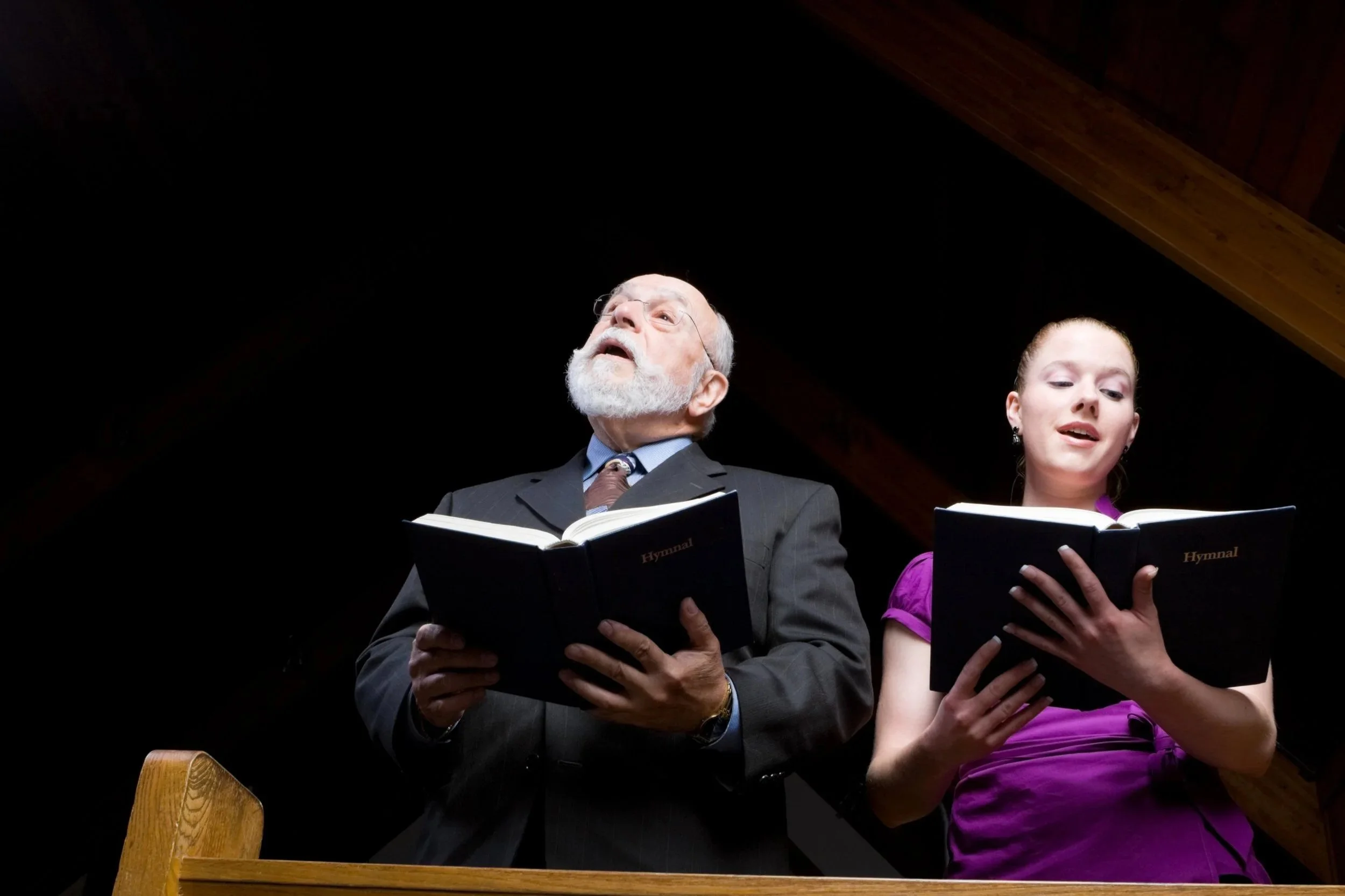
Spirit of the Living God
I’ve been thinking lately about the work of the Holy Spirit in our churches.
Daniel Iverson’s hymn “Spirit of the Living God” served a revival in a Florida community in 1926. The use of a simple melody, along with lyrics where each word carries the singer into the heart of prayer, is compelling and powerful.
Spirit of the living God,
Fall afresh on me.
Melt me, mold me, fill me, use me.
Spirit of the living God,
Fall afresh on me.
This hymn has served communities of faith for nearly 100 years now. It continues in a line of hymns like Adelaide Pollard’s “Have Thine on Way Lord” (1906). That prayer hymn, echoing Jeremiah’s language of a potter and clay, voices an invitation for God to work and shape our lives to God’s good purposes (Jeremiah 18:1ff.). Such a prayer, explicitly asking for God’s Spirit to shape our lives and to transform us, is powerful and life-changing (2 Cor. 3:17-18).
Except that our actions don’t suggest that we believe it.
Mostly what I hear when the Holy Spirit is talked about is how we don’t talk about it. Reasons abound, of course! For example, people say our church tradition has believed that the Spirit only works through the written Word of God. I also hear that our tradition was shaped by Lockean epistemology, and so we are a bunch of rationalists. Since notions about the Holy Spirit are beyond reason, therefore, we have little to say about the Holy Spirit.
Well, here is the deal. I’ve been hearing this for 50 years, and I believe it’s time to be truthful about our aversion to the Spirit. The real reason we typically don’t acknowledge the Spirit’s presence in our congregations and in our lives is that if we really took that “potter and clay” stuff seriously, we would have to let go of our control. Our fear of letting go is often stronger than our desire for the presence of God’s Spirit in our lives.
Yes, it’s true that the Stone-Campbell tradition has a deep strain of aversion to the Holy Spirit, and it is true that a strong dose of rationalism is in our DNA. Indeed, about 15 years ago, Barna Research reported that nearly 60% of American Christians today thought that the Holy Spirit was just a symbol—not a real, living entity. However, even a cursory look at Scripture would lead us to a very different conclusion.
Here are a few places where the witness of Scripture offers insight into the presence and work of the Spirit:
John’s Great Commission. Matthew’s gospel is not the only place where Scripture offers a commissioning of disciples. John’s gospel makes it quite clear throughout the narrative that the Father sends the Son and then the Father and Son send the Spirit. “But the Advocate, the Holy Spirit, whom the Father will send in my name, will teach you everything and remind you of all that I have said” (John 14:26). Then Jesus, in a post-Resurrection appearance to the disciples, commissions them: “As the Father sent me, so I send you” (John 20:21). Jesus then breathes on them (an allusion to the Spirit) and pronounces, “Receive the Spirit” (John 20:22).
The arrival of the Spirit on the day of Pentecost. In Acts 2, as Jesus promised, the Holy Spirit shows up—in a big way. And throughout Acts, the Spirit is associated with faith, conversion, and personal presence in the life of believers and in the community.
Life in the Spirit. In Romans 8, Paul takes up a robust understanding of what it means for believers and communities to live in the Spirit of God. God’s Spirit dwells in us, is present with us, speaks for us, and reminds us that we are inseparable from the God who loves us.
These few examples suggest that the paucity of spiritual vitality in our congregations and in our lives resides not in poor theology that may have been passed on in our tradition. Rather, we may well have to ask why we have not claimed the healthy theology that has been present in the witness of Scripture all along!
I spend a lot of time in congregations. And it is not uncommon for me to average two elders’ meetings per week (oh, the mixed blessings of Zoom!). The Siburt Institute is currently working in consultive relationships with twelve congregations in four states. I love the sacred work of entering the life of a congregation and walking alongside leaders. Those of us who consult within the Siburt Institute feel a deep honor in such work.
But let me share a secret: we are really revivalists, not consultants. The important work of leadership in congregational life does not depend on new strategies or technical changes in leadership structures. The real key to transformative new life in congregations is a spiritual reality. It begins by letting God’s Spirit lead—instead of us.
Years ago, I served at a congregation in Atlanta, and one of my elders, Joe, had grown up in the church where Daniel Iverson served as the minister. He would often talk about Mr. Iverson and about how much he, Joe, loved “Spirit of the Living God.” One of the conversations we had regularly about the hymn concerned the lyrics. Most versions of the hymn have the lyrics written as “melt me, mold me, fill me, use me.” However, according to some historians, Iverson’s original words were slightly different. The altered words were “break me, melt me, mold me, fill me.” Joe liked the idea of “break me.”
I think Joe preferred that rendering because he understood well that, for God’s Spirit to do what God’s Spirit desires to do, humans have to relinquish control. Jesus taught us to pray “thy will be done.” And yet, as humans, we often embody the idea of “my will be done.” And when we embody “my will be done,” God usually complies.
No wonder we can find ourselves exhausted, fearful, and depleted. Maybe it’s time to pray for the Spirit’s leading, and to pay attention to what God may offer, and to let go of our own desire to control. Iverson’s hymn would be a great place to start!
Carson E. Reed