
Frozen Rivers & Fresh Bridges: Leading Towards Intergenerational Ministry
A Lesson by the River
I spent last weekend at a church leadership retreat near Cincinnati, Ohio. We gathered on the first day near the riverbank that weaves through the center of the city. The day was crisp, with sun glistening on the water, and trees turning bright with red, orange, and yellow. I took a deep breath and let my body soak in the perfect fall day.
The group gathered by the water’s edge for an opening time of prayer. After silence, the retreat leader directed our attention to the Ohio River in the background. She gave a brief history of the river with her local knowledge—its use for transporting goods and the way it serves as a natural border between Ohio and Kentucky.
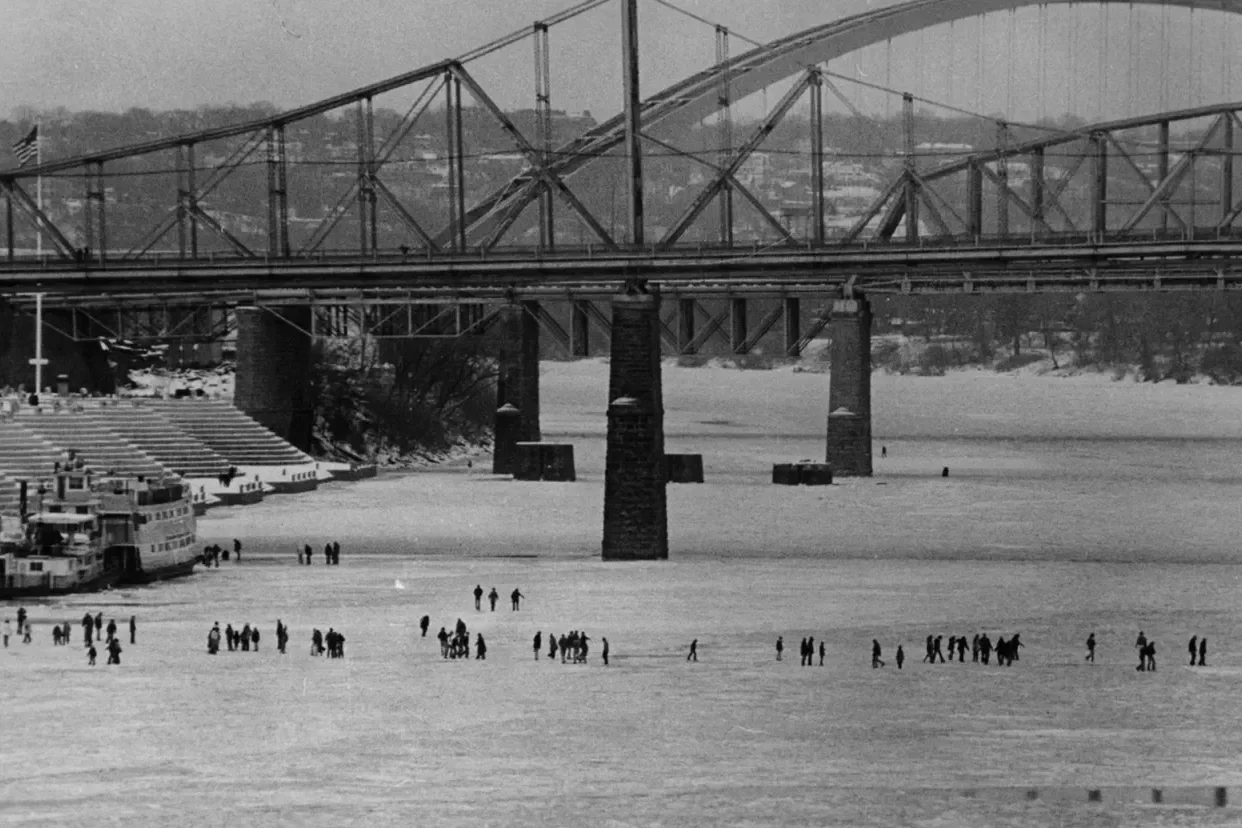
Then she offered a surprising observation: This river, flowing strong throughout the year, will occasionally freeze over in the winter. When this happens today, you might find locals lacing up their skates for an icy adventure. However, years ago, long before the modern structures and overpasses, the frozen river would serve as a fresh bridge for people to cross. The frozen river disappointed some—those who benefited from the flow of goods from one location to the next. Yet, for others without the resources or power, they would find unexpected relief and appreciation for this new path to cross over. A frozen river became a fresh bridge for connection.
I pondered this reflection in my personal life. I thought about those wintery seasons of life. Times when things died or went dormant. Yet, those deaths often brought new life and new emotions. I still experienced pain and grief, but I eventually found hope and possibility. Sometimes what looked like a closure in my life actually created a new path.
Frozen Rivers: The Challenge of Leading Intergenerational Ministry
I also pondered her observation in a communal way. I thought about the church and how we experience freezing seasons in our life together. These difficulties are sometimes forced upon us—an outside circumstance brings a wintery change. Many feel this reality with pandemics and national tragedies that pierce our communities of faith. At other times, though, internal changes brought about by our leadership can cause a kind of death. Our congregation experiences all the elements of emotions when these changes take place.
This latter reality—changes that feel like a death—draw attention to a reality faced with leadership who chooses to prioritize intergenerational ministry. Leaders often discover the many invisible boundaries (physical and otherwise) that keep generations separate. Young families gather in one part of the building. Seniors meet in another. Youth have their space. Each group develops its own rhythms, preferences, and sense of ownership. In the life of many congregations, this is just how the river flows.
But then the leader decides to initiate a moment of change—to try something that might bring these different groups together in meaningful and mutual ways. Often, this means ceasing to do things the ways they were previously done. When this happens, the change feels to many like an icy wind blowing in. The old ways of gathering are challenged by this new thing. A variety of emotions often surfaces. Grief over the loss. Anger and aggression that tries to push back. Sabotage and subtle disengagement. The river we once loved now appears to be something unstable and unfamiliar. Or is it?
Fresh Bridges: The Opportunities of Leading Intergenerational Ministry
This challenge can become an opportunity if the leader helps a church to begin to see the possibilities embedded in these new ministry initiatives. We can navigate the challenge by posing new questions for our congregation to consider. What if our efforts to end the old ways of relating (keeping age groups separate) are now an opportunity for new connections (actually being with other generations)? What if that frozen river is now creating a fresh bridge? Maybe what looks like a closure is really just a move toward something better. Maybe some of the rivers in our church need to grow frozen so that we can learn new ways of connecting.
Decisions to release old patterns are difficult. They must be discerned with prayer and care. Healthy congregational leadership attends to God in the present and in the future. Therefore, we must ask questions like: “What kind of church do we want to become?” “Where are the current rivers of our church taking us?” It is a healthy leadership practice to assess what is and also what could be.
My observation is that many churches are flowing down rivers that only further divide generations in their midst. The ways we worship, carry out programming, and frame our ministry models have generational divides embedded in them. We often wring our hands wondering why our churches feel so divided, but do we ever stop to ask if our current ways of being the church are perpetuating the problem? What do we expect when division is already embedded in the waters of our church?
Proposals for Leading Towards Intergenerational Ministry
My observation, working with and for a variety of churches, is that leaders need to consider ways to freeze our old models of church and create fresh bridges of intergenerational connection. Here are a few strategies and questions a leader might consider when moving in this direction:
Assess the Present: Leaders need to take a congregational inventory about the current ways they are being the church. When do we gather together? Who is present, participating, and leading? Do any of these gatherings reflect an intergenerational spirit of different age groups experiencing mutual and meaningful interaction?
Address the Why: Leaders need to explain the rationale for changes within a congregation. There is a need for over-communicating the reasons you are trying something new. Taking time to give people a deeper understanding of intergenerational ministry can be a helpful step. What is “the why” for this change? How can we help people see the potential and possibility with intentionally intergenerational efforts?
Acknowledge the Pain: Leaders need to be honest that any change in a church will cause growing pains. We should not deny or spiritually bypass the real sense of loss people will feel. Anything new, different, or innovative will stir emotions in our churches. Who will be most impacted by this change? How can we honor the loss that some will feel?
Accept the Resistance: Leaders need to recognize that any change will bring resistance, even when great care and concern is involved in the process. Part of the work of intergenerational ministry is knowing that there will always be some who would rather not participate. Navigating this tension grows out of the posture of the leader. How is our leadership prepared to stay the course in implementing this change? What are the ways our leadership can stay grounded and unified when we face resistance?
Add Intergenerational Experiments: Leaders rarely need to overhaul an entire culture overnight. Often the best way forward is to create a small, modest experiment where members of a church can experience an intergenerational kind of gathering. In our community of faith, might we try one intergenerational experiment?
Gifts of the River
I walked away from the Ohio River that day with deep appreciation of the gift created by the flow of its waters. Yet, I also began to see the gifts created when that same water grew frozen. It’s a good reminder that God can work through many different ways of being the church. We do gather sometimes according to different ages, and these times form us in important ways. Yet, we also need to find times in our churches to build new kinds of bridges for different generations to connect in fresh ways.