Saul of Tarsus and His Preaching of the Risen Christ, Acts 9:1–19
The conversion of Saul of Tarsus has sparked numerous and varied debates throughout the history of Christianity. Some question the historicity of his vision of Christ on the road to Damascus, claiming it was a hallucination triggered by tormenting feelings of guilt—arguing that the fierce persecutor of the church was psychologically predisposed to “see” Jesus, the very object of his attacks.
However, nothing in the narrative of Acts supports such claims; in fact, it’s quite the opposite. The text states that Saul was traveling to Damascus emboldened by letters from the Sanhedrin, which sought the backing and cooperation of synagogue leaders to capture fugitive Christians and bring them back to Jerusalem (Acts 9:1–2). There is not the slightest hint of contrition or psychological anguish in his demeanor.
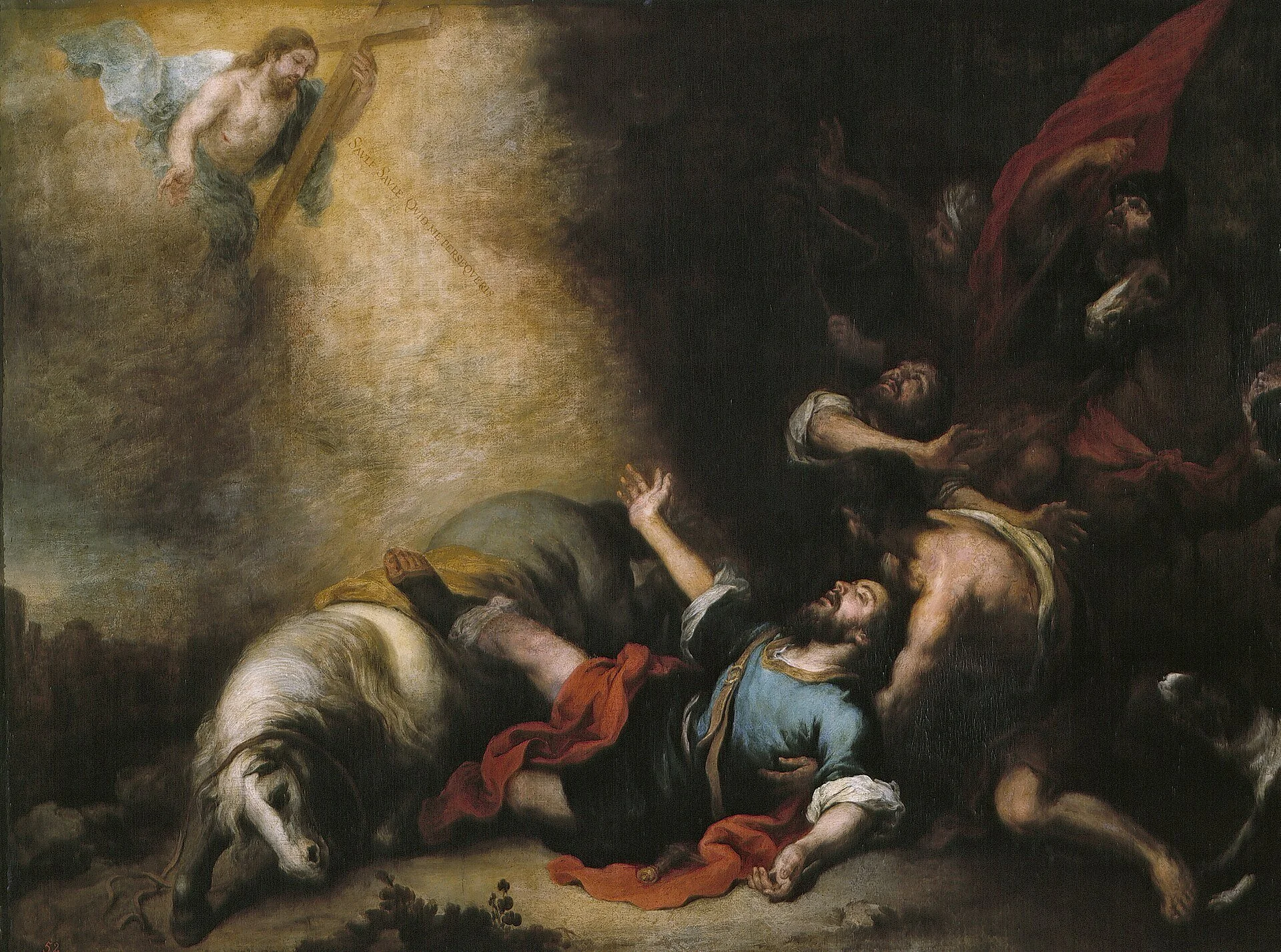
Jesus’s appearance to him came as a complete surprise. The voice of the Son of God left him frozen in his tracks: “As he neared Damascus on his journey, suddenly a light from heaven flashed around him. He fell to the ground and heard a voice say to him, ‘Saul, Saul, why do you persecute me?” (Acts 9:3-4). And, blinded by the radiance of Christ’s glory, he was led by the hand into the city of Damascus, where Ananias preached the Gospel to him and baptized him. He immediately began preaching the risen Jesus and did not stop until the day of his death (9:20, 28–29). The radical transformation in Saul’s life, his subsequent passionate and tireless missionary work, and his willingness to die for the cause of Christ, stand as irrefutable evidence of the truth of his conversion.
What defined Saul’s new life and mission was precisely the conviction of the resurrection of Jesus Christ. In 1 Corinthians 15:1-5, he says:
Now, brothers and sisters, I want to remind you of the gospel I preached to you, which you received and on which you have taken your stand. By this gospel you are saved, if you hold firmly to the word I preached to you. Otherwise, you have believed in vain. For what I received I passed on to you as of first importance: that Christ died for our sins according to the Scriptures, that he was buried, that he was raised on the third day according to the Scriptures, and that he appeared to Cephas, and then to the Twelve. After that, he appeared to more than five hundred of the brothers and sisters at the same time, most of whom are still living, though some have fallen asleep. Then he appeared to James, then to all the apostles, and last of all he appeared to me also, as to one abnormally born.
For Saul, the resurrection validates Jesus’s claim as the Messiah, the Son of God, and the Savior of the world—so much so that, for him, if Christ had not risen, the entire edifice of Christian doctrine would collapse, and humanity would be stripped of all hope of forgiveness:
And if Christ has not been raised, our preaching is useless and so is your faith. More than that, we are then found to be false witnesses about God, for we have testified about God that he raised Christ from the dead. But he did not raise him if in fact the dead are not raised. For if the dead are not raised, then Christ has not been raised either. And if Christ has not been raised, your faith is futile; you are still in your sins. (1 Corinthians 15:14-17)
Indeed, in Romans 4:25, Paul writes that Christ’s resurrection was for the justification of believers. Moreover, the resurrection of Christ is the guarantee that those who believe in him will rise to eternal life on the last day, as he says in 1 Corinthians 15:20-23:
But Christ has indeed been raised from the dead, the firstfruits of those who have fallen asleep. For since death came through a man, the resurrection of the dead comes also through a man. For as in Adam all die, so in Christ all will be made alive. But each in turn: Christ, the firstfruits; then, when he comes, those who belong to him.
Nevertheless, it is surprising that, according to the biennial State of Theology study published by Lifeway Research, only 47% of U.S. adults “strongly agree” that the physical, bodily resurrection of Jesus was a real historical event. Clearly, there is a great need to place Jesus’s resurrection back at the center of our discussions. Doing the opposite is inconsistent with the content of apostolic preaching and teaching.
The most powerful motivation for living the Christian life is the hope that one day Christ “will transform our lowly bodies so that they will be like his glorious body” (Philippians 3:21). To preach the resurrection of Jesus is, therefore, to reaffirm our own resurrection and our own hope of life eternal.
Image credit: La conversión de san Pablo, by Bartolomé Esteban Murillo (ca. 1680), in the Museo del Prado (https://commons.wikimedia.org/wiki/File:La_conversión_de_san_Pablo_(Murillo).jpg)