Our people, our ministries and our families have specific needs, but sometimes we don’t do a great job at identifying and ministering to those needs. So what can we do about it?


All in Siburt Staff
Our people, our ministries and our families have specific needs, but sometimes we don’t do a great job at identifying and ministering to those needs. So what can we do about it?
The Siburt Institute’s values emerge from our commitment to faithfully embody the partnership in Jesus’s ministry to the Father by the Holy Spirit for the sake of the church’s witness to the world.
We need help and support, and that support can come from our brothers and sisters who are no longer living, by means of their writings and their example.
Such work—teaching, proclaiming, healing—is the work of Jesus’s ministry. And it is the work of Jesus’s people. Whether those believers are found in the ancient city of Antioch or in towns and cities across this land today, the work is the same.
The posture reflected in Acts 15 is the same posture that I encourage my ministry students to practice in our classroom. It is the one that I pray they will eventually bring into the churches they serve. And I wonder if this is the posture that we are currently longing for many of our own churches to pursue.
We know that church leaders need vision to see God’s work, clear eyes to see our ministry contexts, and hope for God’s redeeming work in the world. We know that the future is uncertain, but we also know that God is at work, that the world is not just our enemy, and that we have good grounds for hope!
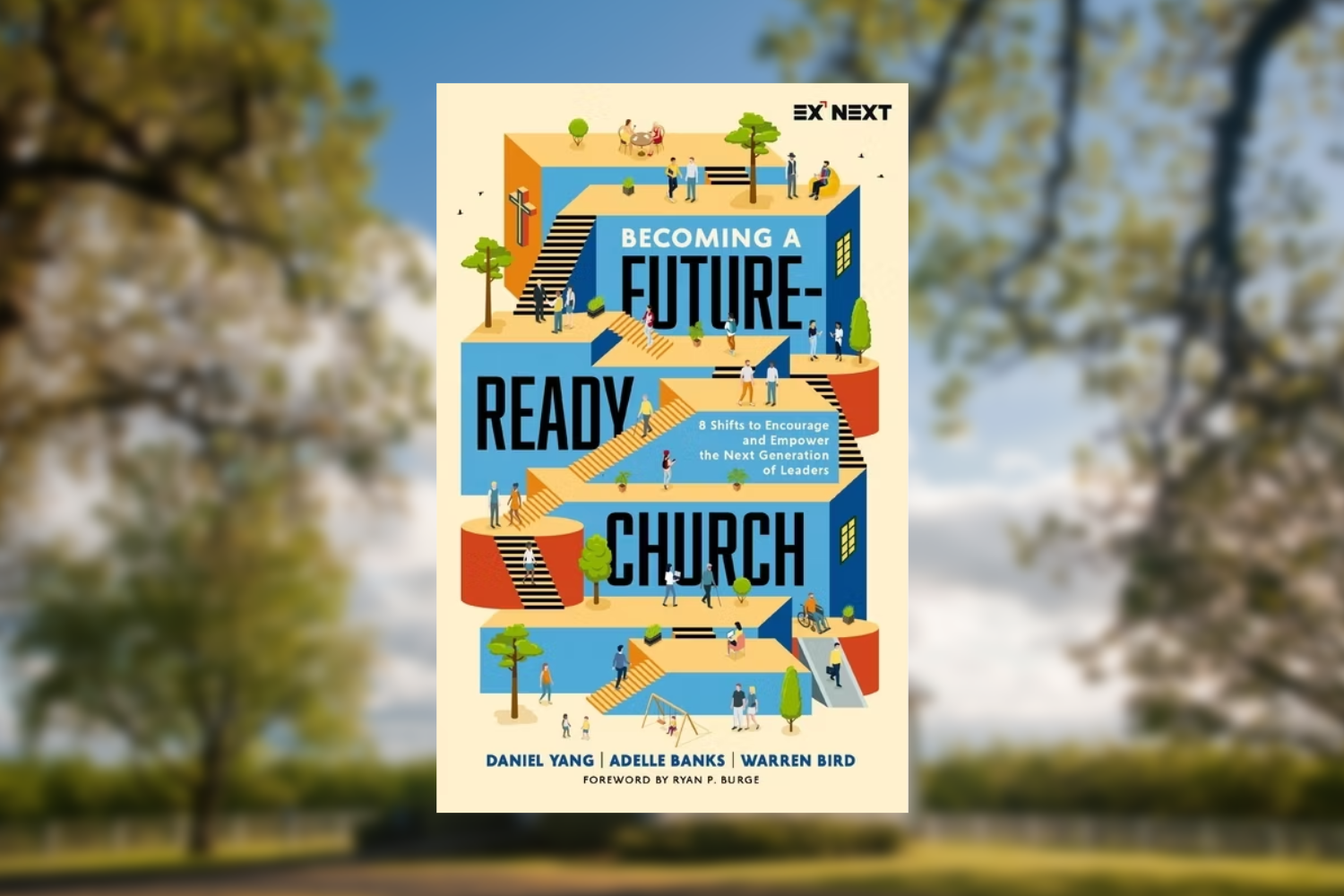
By empowering and encouraging rising generations of leaders, you have the opportunity to faithfully steward the responsibility of those whom God has entrusted to your care.
What if we could think this differently about our partners in life and leadership? What if, rather than holding them to an impossible ideal of relationship or partnership, in the hopes that we would never be wronged, we treat them with love and respect and care even though we know they will hurt us, wrong us, annoy us?
It can be ok that that other church or denomination is more successful in our town; we don’t have to find fault with them or let jealousy steal our hearts. It can be ok that, in the past, our groups have had significant conflict; not all inter-group conflict is resolvable, and sometimes we just have to lay down our weapons and move on, seeking first God’s kingdom and righteousness.
I think what we’ve missed is that some matters of church life and spirituality aren’t a matter of right and wrong. To be certain, some matters are quite clear, but it’s not as common as we think. In some cases, we’re dealing with a continuum that might include a wide range of possible answers. In other cases, there’s ambiguity as to which position might be right.
Ever been disfellowshipped? If so, you know some of the pain that can be there. Despite its positive foundation, it is a way that Christian behavior mirrors some of the most damaging and painful tendencies of our modern world.
Ministry can sometimes feel like sailing into the wind—navigating competing needs, weary congregations, complex situations, and quiet pressures. And in a world enamored with metrics, driven by measurable outcomes and focused on the correct formula for success, it is easy to forget that the kingdom of God does not advance in this way. It advances by the breath of the Holy Spirit.
We always have the choice as to how we see another person. We can resist evil, reject unrighteousness, and even contend for the faith without losing sight of the image and likeness of God in our conversation partner, our opponent, our enemy.
These three convictions—everything we do derives from God’s doing, we are stewards of people, and God calls us not to a task but a people—provide something significant to us as leaders in our communities of faith. Even when we have persons that God entrusts to us that are “extra grace required,” persons full of anxiety, or those who are clothed in self-righteousness, we can find and hold space to care for them.
It is true that our movement has always valued Scripture as being “useful for teaching, rebuking, correcting and training in righteousness.” We know that “the world” can be an enemy to us, and so we will always need to recognize situations where we need to hold on, be faithful, and separate ourselves from the world. In other words, we can’t assume that relevance solves our problems – we might have to be willing to be “different.”
What does it look like to move from exclusion to representation to inclusion? It was a hard question to wrestle with because it meant that we had to acknowledge all of the ways that we were falling short.
In moments as seemingly mundane as the passing of Communion trays, we get to help shepherd our people by serving them. In doing so, we follow in the footsteps of the Chief Shepherd.
I can honestly say that I am very blessed right now, even in the midst of all the grief. Why am I blessed, despite my mourning? It’s because I am being comforted in my mourning by fellow believers. Would I call myself “fortunate,” at least in the ways the world outside uses the term? Probably not. But I am most certainly blessed, in that good biblical sense of “the state in which everyone has exactly what they need right now, thanks to God’s good work in their lives”
While this is only a short list of ideas, my hope is that these suggestions offer a point of reference for what intentional intergenerationality could look like in your church as you think through your own context. Regardless of how your church seeks to include children more intentionally within its worship practices, the most important point is to start somewhere so that you can embody being a church where all God’s people gather.
I don’t think there’s one “silver bullet,” as they say, but I think that we can be bolder about some of our worship practices. If we are willing to “go big” on some central practices, they can help us have both a strong center and an open door.