Trauma Leaves Its Scars
Oh, it was traumatic, and bloody, and tragic. And its consequences were far reaching. That “it” was a six-year-old child who was on ECMO, a heart-lung bypass machine used in heart surgeries and also as life support for those in severe conditions. The child had a sudden and unexpected event that led to massive bleeding out in his bed while admitted to the hospital ICU.
His parents were at his side almost immediately, calling out feverishly for the world of medical professionals who were at their fingertips and yet felt so far away in that moment. For their part, this incredibly advanced team of cardiologists, nurses, PTs, OTs, intensivists, and ECMO specialists endured what felt like hours of compressions, blood transfusions, and desperate creative fixes to what was unexplainable and unimaginable, even for them. The parents lived the worst nightmare that they had never had, and their medical team alongside them was left with the crushed, bloodied, and jagged shards of that nightmare made real. Trauma had found its way to that room, left a child suddenly dead, and created lasting scars on hundreds of people.
Trauma, in its purest forms, brings terror, hyperarousal, intrusion of life, destruction of our sense of normal and routine, and attacks on the sense of self.[1] And that was true in that room—it had filled with a ghostly and sullen silence that spoke too many emotions to count.
It was already too much. You see, that boy was not supposed to be there. At least that is what his parents felt. His diagnosis occurred post-birth—in fact, not even until he reached three years old. So, to his parents, a normal playful boy became overnight an agonizing sudden-heart-attack risk, marring every Nintendo play session shout of joy and every wrestling match with his dad to an anticipated trauma. This added to their own trauma of the loss of multiple pregnancies before this boy arrived in their arms. The complexity became even more distorted when they experienced the loss of a grandfather months before this boy’s death, as well as the forced transitions of work and home to Houston from another state. In their case, trauma was complex and complicated, forced and natural, anticipatory and also past, full of terror and intrusion and destruction of what was good.
It was already too much. You see, for their deeply specialized staff, that code shouldn’t have happened. They had run the tests, they had done the surgeries, they had sought out multiple heart transplants, and they had endured too many conversations about hypoplastic left heart and pressures in his atria to count. They were just waiting for the right heart. They were short staffed as an ICU, too, as many are, with ECMO specialists and physical therapists and VAD (ventricular assistive device) coordinators working endless hours to guide him through.
Trauma tempted some of its most dangerous and harmful emotions and questions: “Did I miss something? Did we do it right? Should I have checked…? Should…if I…Should…if I….” The intrusive cycles ran in our minds. The guilt, the shame, the horror, and the willingness to blame myself to protect another ran hot, and understandably so. That hyperarousal and attack on the self was present even at a group level.
To say that trauma and traumatic experiences are hard is an understatement, because they are indescribable. Even the journey of recovery is complicated. Judith Herman, a pioneer in the trauma field who identified the three stages of trauma recovery—safety, retelling of the story, and reengagement—noted that all of those stages can bring an unwanted wealth of emotions and experiences, and yet those stages are the pathway to making meaning in our lives of what is most awful, scary, and terrible.[2]
Trauma has a way of intruding on how we make sense of the world (what Crystal Park calls global meaning), forcing us to make sense of the traumas we face (what Park calls situational meaning), and then trying to match them, make them coherent in some way, and either assimilate or accommodate the meaning in front of us with what we want to strongly believe about the world and life.[3] That is hard enough to do with a single trauma within a single event, let alone when the human experience, as with this young boy, invites multiple traumas that are complicated, layered, and without defined limits.
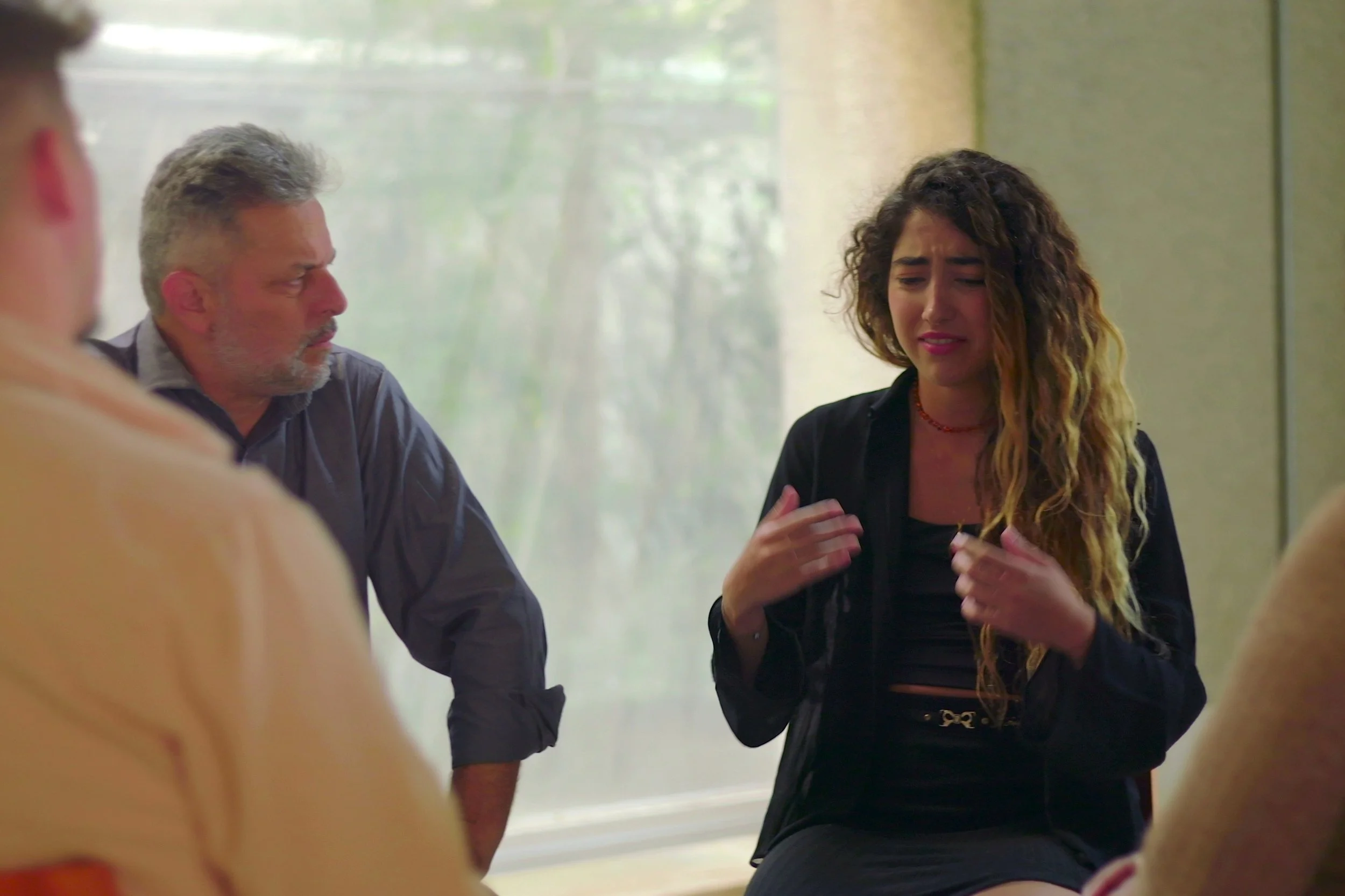
Perhaps trauma requires us to first pause and make space for what is indescribably hard and “to allow.” To allow the one we care for to feel a moment of safety, and then maybe a second moment, either physically or emotionally. To allow them to tell the story or stories, when it is helpful, and to the point that it is. To allow them to experience us as persons who validate that their experience is normal, understandable, horrific, and that their words for it are sufficient because they lived it. To allow them the God-given dignity to make meaning of their trauma-filled lives as they dare to do so, wrestling with God, reaching for connection, defying the constraints of cultures and limited vocabulary, and feeling fully. To allow them to feel and hear and see that their trauma in this moment may feel bigger than anything, but that one day, it will not define them as the beloved creation of God that they are.
Zaleski, Kristen L., et al. “Grounding Judith Herman’s Trauma Theory within Interpersonal Neuroscience and Evidence-Based Practice Modalities for Trauma Treatment.” Smith College Studies in Social Work, vol. 86, no. 4, Oct. 2016, pp. 377–93. DOI.org (Crossref), https://doi.org/10.1080/00377317.2016.1222110.
Herman, Judith Lewis. Trauma and Recovery: The Aftermath of Violence - from Domestic Abuse to Political Terror. 20. pr, BasicBooks, 2003.
Park, Crystal L. “Meaning Making Following Trauma.” Frontiers in Psychology, vol. 13, Mar. 2022, p. 844891. DOI.org (Crossref), https://doi.org/10.3389/fpsyg.2022.844891.