
I did what most people do when they first encounter the Enneagram: I started asking everyone around me things like “Do you do this?” People would look at me a little sideways, and I could not figure out why my question was not landing.
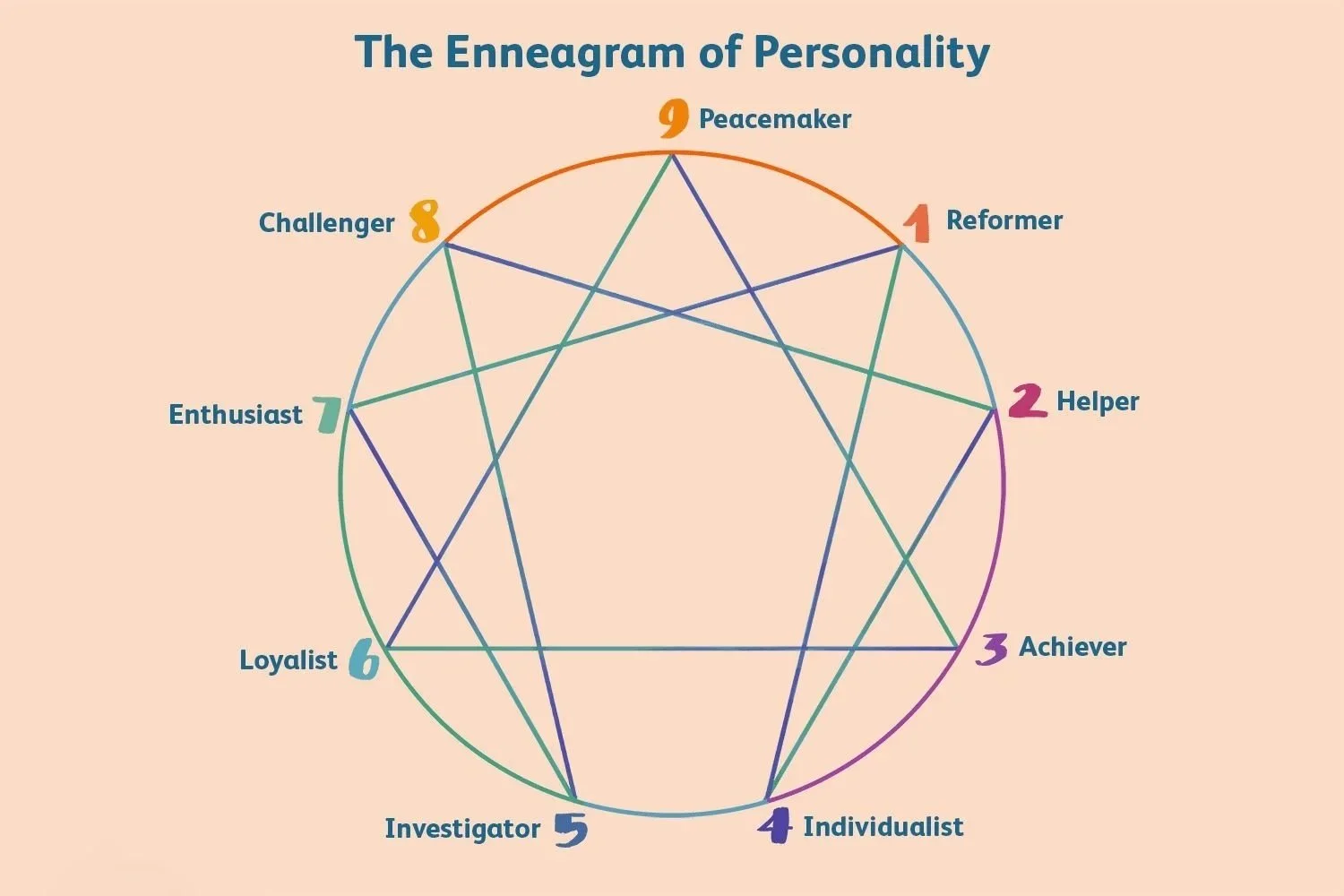

I did what most people do when they first encounter the Enneagram: I started asking everyone around me things like “Do you do this?” People would look at me a little sideways, and I could not figure out why my question was not landing.
I came to deeply admire and respect the faith of my brothers and sisters in Christ in Argentina. We didn’t always agree on theological points of view or ministerial practice but I loved and admired their profound faith and faithfulness to the way of Jesus.
When a small church closes, a community loses both its anchor and the energy generated when it responds to local needs.
I have questions about the story in John 8 about the woman caught in adultry. I want to know what Jesus wrote when they were trying to trap him between loving people and keeping God’s Word.
Individually, we are only a grain of salt, and a grain of salt by itself is not very useful. It doesn't season anything. It doesn't preserve anything. Salt must be used in handfuls to fulfill its function. The church is the salt of the earth as a community, and therefore, it must preach the gospel as a community.
Church is meant to be more than a bearer of ideology. We are to be a pilgrim people, journeying together on the difficult yet rewarding path of becoming more and more godly each day, while inviting others to join us on that journey.
Such work—teaching, proclaiming, healing—is the work of Jesus’s ministry. And it is the work of Jesus’s people. Whether those believers are found in the ancient city of Antioch or in towns and cities across this land today, the work is the same.
Consider a single thread and how easily it can be snapped or broken when pulled from opposite ends. Then look at a braid, where each strand is no longer individual but is plaited to form a stronger, interlocking structure.
Though we likely believe that God is in what we feel called to do, there is a serious temptation towards doubt and apprehension towards failure in those partnering with God’s Spirit in kingdom building.
So ask yourself, am I feeding my flesh, or am I feeding my soul? Am I merely wearing the name of Jesus, or is His Spirit shaping my life?
We all have the capacity to make relational choices that can help mend age segregation in our churches. Specifically, I want to offer one practice for followers of Jesus that can help all of us swim upstream towards greater unity in the generational body of Christ: the practice of listening for unity.
We talk about God’s love shown through the death of His Son on the cross for our sins. Baptism is the way we share in that death and in that love. We talk about our sins being buried. And lately, we have been talking quite a bit about the power of resurrection and baptism.
What I have found, though, is that families in crisis rarely need an ethics lecture. They need permission: permission to grieve, permission to be afraid, and permission to believe that letting go of aggressive treatment is not the same as letting go of the person they love.
I am a navigator in the various intersections of hopes and fears emerging into ethical dilemmas unfolding in the ICU. Within the hospital setting, chaplains offer emotional support and spiritual care services as members of the patient care team while simultaneously addressing ethical considerations by upholding confidentiality and impartiality.
We are skilled professionals, capable of having difficult conversations in moments of crisis. We can share hard news and provide education about options in ways that are compassionate and loving. What we cannot do, though, is presume to know the best way for someone to die.
I want to share some encouragement and guidance for how I am trying to maintain and develop healthy relationships with my current shepherds. I am by no means the expert on this dynamic, but I will share what little I have learned in over a decade of congregational ministry, serving in various roles for those churches.
Let us pray that God sends Barnabases to our churches! Let us pray that He will make some of us “sons of encouragement”! The need couldn’t be greater today!
The posture reflected in Acts 15 is the same posture that I encourage my ministry students to practice in our classroom. It is the one that I pray they will eventually bring into the churches they serve. And I wonder if this is the posture that we are currently longing for many of our own churches to pursue.
Conflict is to be expected; get in there and work on it. Possibly the best gift for your congregation is conflict training. The longer you wait, or the more you let fear paralyze you, the worse it gets.
With this article, we offer our perspectives, regrets, and takeaways of our conflict, so that others may learn to behave with more skill and wisdom. In this first part, we’ll talk about how we got to that point of conflict, and the actions we took to try to resolve things.